A clear result. A complete trail of evidence.
Your report is the starting point. Behind every sample is a connected record of the laboratory work, the instrument data, and the calculations that produced your result. It's yours to explore.
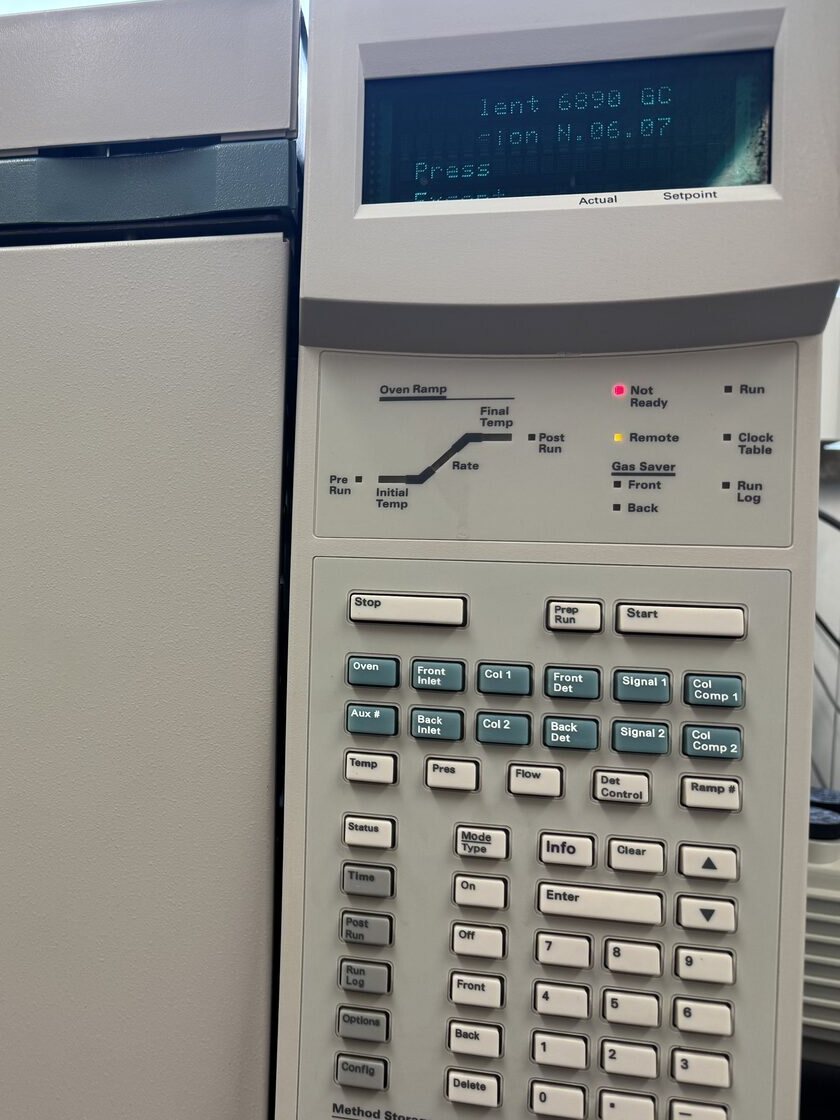
Follow your sample from lab work to result
We make your sample's full Computable Lab event graph available to you. It's a connected record of what happened to your sample and how its measurements became the numbers in your report.
That record includes the actual instrument data trace and the analysis script that calculates the reported percentages. You can examine the source data, follow the calculation, or share the record with a scientist for independent review.
You don't need to read code or interpret a chromatogram to use your report. Start with the summary and explore as much of the evidence as interests you. To access your sample's full record, contact us with your order ID.
Published methods
Our public method overview explains how we prepare a sample, separate its fatty acids, calibrate the instrument, and calculate the result. Your sample record connects that approach to the work performed on your food. Start with our fatty-acid method.
Calibration against reference standards
Our fatty-acid analysis uses a 37-component FAME reference mix with certified component values. Calibration runs bracket each sample batch, and component-specific response factors are used to calculate composition.
Replicate measurements
We analyze samples in replicate and review agreement before reporting. When replicates disagree, we investigate, rerun, or flag the result. The report includes precision information to help you interpret the numbers.
Blanks and controls
Reagent blanks pass through the same preparation steps as samples to check for contamination. Control materials with an expected composition help us assess batch performance. Failed controls are investigated and corrected before results are released.
Context for every measurement
Reports include detection limits and explain uncertainty where it matters. A result below the method's detection capability is marked with its limit, so you can distinguish a small measurement from a component that wasn't detected.
We check methods against reference materials and compare profiles with published composition ranges for common fats. These checks support interpretation; they are separate from formal external proficiency testing.
Accreditation and intended use
Test Your Food is not ISO/IEC 17025 accredited. Our practices draw on that standard's approach to documented methods, calibration, and quality controls. Results are for personal information. For testing that requires an accredited report, choose a laboratory with the appropriate scope.
Questions about your result or its supporting evidence? Get in touch. We'll help you work through it.
See what goes into your result.
Explore the method behind our fatty-acid composition test.